
By Darlene Bodnar, Denver, Colorado, Region Coordinator for ARE’s Rocky Mountain Region Reprint from Rocky Mountain Region’s Newsletter
Growing up with my sister was a rare treat. Nancy and I were very close and no one could separate us. Throughout the years this has never changed. We have always been there for each other and have a special bond that I definitely cherish. We have gone through life’s experiences, both the good and the opportunities, hand in hand. When her 32-year-old son died in 1999, we both grieved together helping each other get through it.
Nancy is a heavy smoker and has developed COPD (Chronic Obstructive Pulmonary Disease). Through a blood test it was discovered in 1996 that she had a rare genetic lung disease called Alpha- I Antitrypsin – a disease of the lungs that, because of defective genes, can cause emphysema and/or liver damage. Since this is an inherited disease she insisted that I get a blood test to see if I also had been affected. Feeling confident that this was not so, I did not hesitate to get the test. However, the test revealed that not only did I have the disease but mine was at a level more serious than Nancy’s. She was a “M-Z;” I was a “S-Z.”
I had recent memories of not being able to breathe well at high altitudes in the last five years. I had grown up in Denver and was used to high altitudes, but I knew something was changing for me. I was told there was a worldwide support group called “Alpha Beaters” and was given a local phone number to call. During my conversation with the gentleman who headed the local chapter, he told me I shouldn’t get discouraged because I would be able to get a lung transplant when needed. He had received his transplant several years ago. I still remember hanging up the telephone in total shock.
I had been studying the Cayce readings diligently for over 30 years, and I immediately knew I would be able to get help through those wonderful readings. I remembered well the story of Gertrude Cayce and her experience with tuberculosis. I particularly remembered the suggested treatment in the readings of the charred oak keg and immediately started to research more concerning the keg. I also read where Gertrude kept the keg by her bedside and used it the rest of her life for her lungs. I decided to buy one and try it. After I received the keg and soaked it in water to seal it, I filled it about half full with Laird’s 100 proof apple brandy. The readings said that it should be placed on a register to heat it. Since we don’t have floor registers anymore, I bought a heating pad that wraps around the keg to keep it warm. This helps to make the fumes much stronger when inhaled. A plastic tube came with the keg; and after shaking the keg, the tube is inserted into the opening and only the fumes are inhaled (never the brandy).
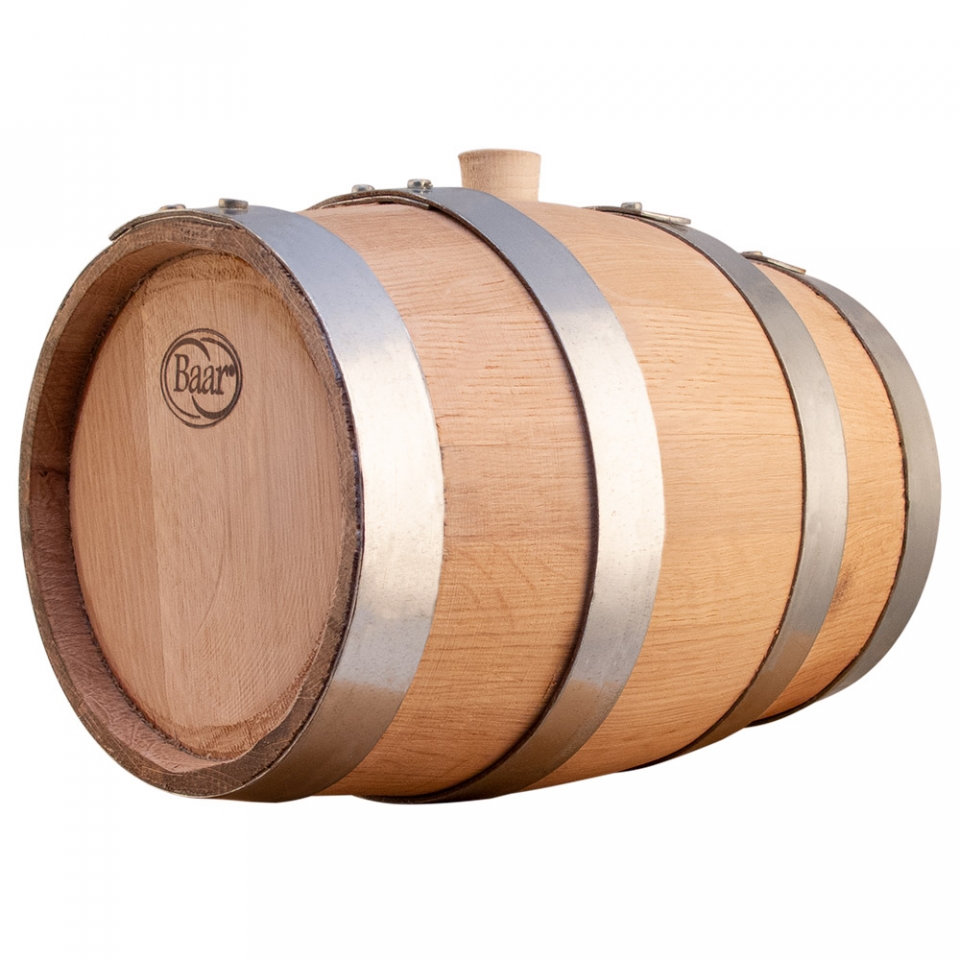
I have used my charred oak keg for several years, and I have had no problem with the Alpha- I Antitrypsin. The keg has worked wonders for me. The doctors keep telling me my lungs are doing great! WOW! Along with other methods of healing such as diet, attitude, meditation, and prayer the charred oak keg is a household word in my home and a permanent fixture on my kitchen counter. My family also uses it when they have congestion or bronchial problems. Members of our study group often take advantage of the fumes when they meet in our home. My daughter benefited greatly when she had a bout with pneumonia. With all the pollution we deal with today, I strongly feel that the charred oak keg should be a serious consideration for any family. And, yes, my sister Nancy has bought one herself and is doing quite well. Breath is life, breath is precious, breath is everything – and what a wonderful way to maintain it.
This article has also appeared in the ARE Southwest Region’s newsletter several times. Here is something that they added:
Editor’s Note – It has been reported keeping the keg wrapped in heavy duty aluminum foil keeps the keg from drying out. A heating pad underneath the keg helps diffuse the fumes. Also when you purchase the brandy, purchase three bottles. Two bottles fill it to the necessary level, and the contents of the other bottle are used to keep the brandy at the required level as the fumes do eventually evaporate. With the help of a dip stick one can easily determine the necessary level. When first filled, mark the dip stick. Then the keg is good for a lifetime and will always be ready for use.
Leave a Reply